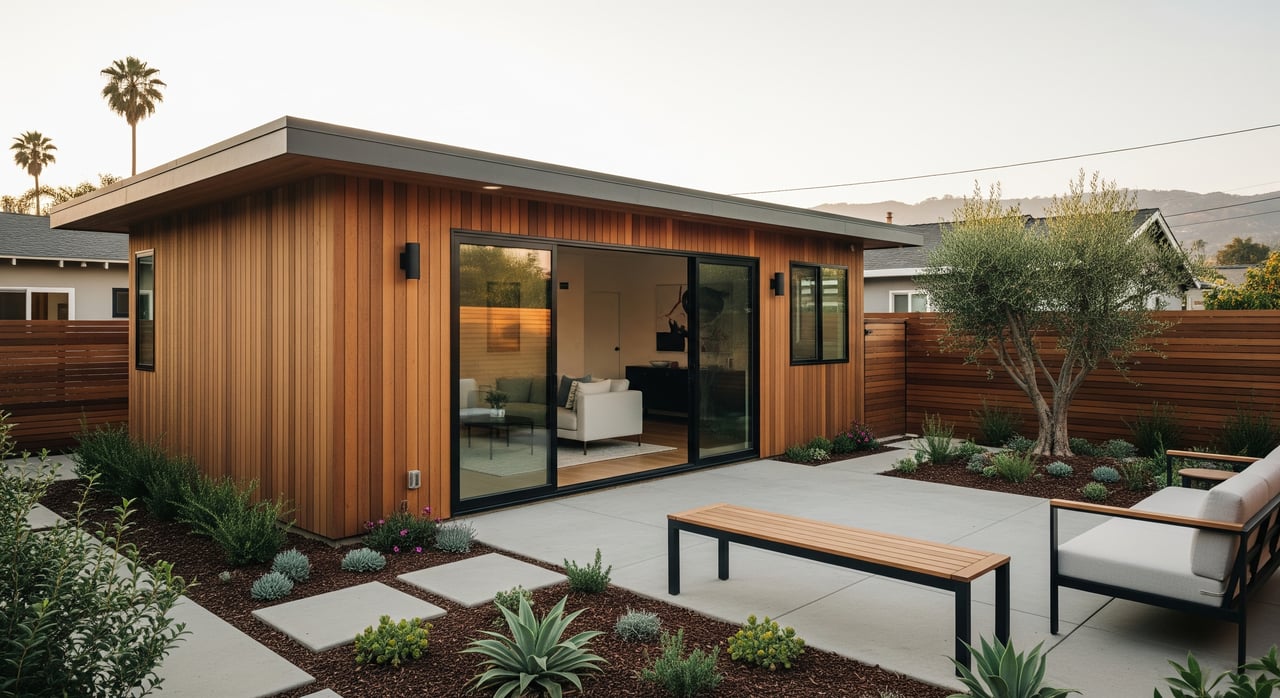
Is your Mar Vista backyard quietly holding your next income stream? If you have unused garage space or room behind your home, an accessory dwelling unit could help offset your mortgage or create a flexible, long-term rental. You want clear answers on rules, costs, timelines, and rent potential before you commit. This guide gives you the essentials for Mar Vista so you can plan with confidence and avoid common surprises. Let’s dive in.
Why ADUs work in Mar Vista
Mar Vista sits near major job centers, beaches, and Westside amenities, which keeps demand strong for well-designed studios and one-bedrooms. Small, modern rentals are limited, so a private ADU with outdoor space often stands out. You can design for privacy, add in-unit laundry, and deliver a turnkey product that attracts stable tenants.
Beyond market demand, state law has made ADUs easier to approve and build. With a smart site plan and the right team, you can unlock value without buying a separate investment property.
Know the rules in Los Angeles
Understanding the rules up front helps you design the right unit and timeline.
State baseline you should know
California’s ADU laws set a permissive baseline that local cities must follow, including ministerial approvals and relaxed parking in many cases. Review the state’s guidance to understand allowed unit types and processing timelines through the California HCD ADU resources.
Local checks for every Mar Vista lot
- Confirm zoning and overlays. Use the City’s mapping tool to verify zoning, HPOZ, and any special overlays on your parcel with LA ZIMAS.
- Review permit processes and checklists. The City of Los Angeles processes ADU permits through LADBS. Start with LADBS permit resources to understand submittal steps and inspections.
- Coordinate with City Planning if you have overlays or design constraints. See Los Angeles City Planning for zoning rules and overlay programs.
Parking, setbacks, and size
ADUs benefit from relaxed standards compared to a primary home. However, setbacks, height, and size limits still apply and vary by ADU type. Detached, attached, garage conversions, and junior ADUs each follow different rules. Confirm specifics with LADBS early, especially if you plan a second story or an ADU above a garage.
Rental limits and rent control
- Short-term rentals. Los Angeles regulates short-term rentals and requires registration for eligible hosts. If your strategy depends on short stays, review the City’s Home Sharing rules through Los Angeles City Planning. Many owners choose long-term rentals to reduce compliance risk.
- Rent regulation. Newly built ADUs are generally not covered by the City’s RSO, but state tenant protections can apply in some situations. Confirm your plan with a local attorney before leasing.
Lot types and best ADU paths in Mar Vista
Mar Vista lots range from standard single-family parcels to corner and narrow lots. Your lot shape and existing structures will guide the best ADU form.
Common build paths
Garage conversion
- Pros: Often the lowest-cost path with faster construction and fewer new utility runs.
- Cons: Structural upgrades may be needed. Check parking replacement requirements with LADBS.
Attached ADU
- Pros: Can share infrastructure and may be more cost-effective than fully detached.
- Cons: Less privacy and potentially more complex permitting as an addition.
Detached rear yard ADU
- Pros: Best privacy and rentability. Flexible layouts from studio to two-bedroom.
- Cons: Highest cost per square foot with new foundation and full utilities.
ADU above garage
- Pros: Efficient footprint and attractive product.
- Cons: Requires structural reinforcement and stair access that add cost.
Junior ADU (JADU)
- Pros: Lower cost and faster to create within existing living space.
- Cons: Smaller size and lower rent potential compared to a full ADU.
Site factors that change cost
- Setbacks and buildable envelope relative to lot lines.
- Tree protection and street tree permits that affect excavation.
- Sewer and water lateral location and capacity.
- Easements, access, and staging space for construction.
- Topography that may impact foundation design.
Cost, timeline, and financing basics
Every project is unique, but you can plan around the typical sequence and drivers.
What drives cost most
- ADU type. Conversions are generally less expensive than new, detached builds.
- Size and program. A full kitchen, separate utilities, and larger layouts add cost.
- Site work. Grading, retaining walls, and longer utility runs increase budgets.
- Structure. Foundations, seismic upgrades, and rooftop additions demand more engineering.
- Soft costs. Design, engineering, permits, and impact fees where applicable.
- Finishes. HVAC, appliances, and interior specs vary with your market positioning.
Expected timeline
- Feasibility and schematic design: 2 to 6 weeks.
- Architecture and engineering: 4 to 12 or more weeks.
- City review and permits: 2 to 4 or more months if ministerial. Longer if corrections or overlays apply.
- Construction: 3 to 9 or more months. Conversions are faster than ground-up.
- Final inspections and occupancy: days to weeks based on scheduling.
Financing options to consider
- Cash-out refinance or HELOC for owner-occupiers.
- Construction or construction-to-permanent loans for ground-up ADUs.
- ADU-focused renovation loans from portfolio or local credit unions.
- Grants or local programs when available. Check current offerings through LADBS permit resources and Los Angeles City Planning.
Taxes and insurance
- Property taxes. New construction typically increases the assessed value of the improvement, not the original base under Prop 13. See the LA County Assessor for how new construction is assessed.
- Income taxes. Rental income is taxable. Expenses, interest, and depreciation may offset income. Consult a CPA.
- Insurance. Notify your carrier. You may need landlord coverage and to confirm ADU use with your lender.
How to underwrite your ADU
Treat your ADU like a small rental investment and model conservative cases.
Step-by-step approach
Site feasibility and entitlement
- Pull parcel data and overlays in LA ZIMAS.
- Confirm sewer and water lateral locations and capacities.
- Order a site survey if boundaries or easements are unclear.
Design and pricing
- Engage a local ADU architect for a schematic design and budget range.
- Obtain 2 to 3 contractor bids for realistic pricing.
Build a complete budget
- Hard costs plus soft costs, fees, and a 10 to 20 percent contingency.
- Include potential sewer lateral work and tree mitigation.
Financing and cash flow
- Choose your loan type and terms.
- Estimate stabilized rent using nearby comps and apply a vacancy factor. A conservative range of 5 to 8 percent is common for small LA rentals.
- Estimate operating expenses for taxes, insurance, utilities, maintenance, and management. Many small rentals fall in the 25 to 40 percent of gross rent range, depending on who pays utilities and maintenance.
Stress test your plan
- Model scenarios for rent growth, cost overruns, and permit delays.
- Consider policy risks such as potential owner-occupancy requirements tied to financing.
Key metrics to track
- Gross Rental Income equals monthly rent times 12.
- Effective Gross Income equals Gross Rental Income times one minus vacancy rate.
- Net Operating Income equals Effective Gross Income minus operating expenses.
- Cash-on-Cash Return equals NOI minus debt service divided by cash invested.
- Debt Service Coverage Ratio equals NOI divided by annual debt service.
Design moves that boost rentability
- Prioritize privacy. Separate entrances, sightline control, and good sound isolation.
- Offer a full kitchen and in-unit laundry. These raise appeal and rent per square foot.
- Add outdoor space. A small patio or yard can differentiate your unit.
- Plan utilities. Sub-metering increases flexibility but may cost more up front.
- Align finishes to the market. Durable, modern finishes photograph well and limit turnover costs.
Your next steps
- Verify parcel details and overlays in LA ZIMAS.
- Review City submittal steps with LADBS permit resources.
- If you need overlay guidance, consult Los Angeles City Planning.
- Track neighborhood planning updates with the Mar Vista Community Council.
- Get a schematic plan and budget from an ADU-experienced architect.
- Collect at least two contractor bids and build a full pro forma.
- Check assessment implications with the LA County Assessor.
Thinking about your property’s specific potential in Mar Vista and how an ADU fits your larger real estate plan? Schedule a private, no-pressure consult with Adam Dehrey to map options, timelines, and next steps.
FAQs
What is the first step to build an ADU in Mar Vista?
- Start with a parcel check in LA ZIMAS to confirm zoning and overlays, then speak with an ADU architect about a schematic plan and budget.
How long does it take to permit an ADU in Los Angeles?
- Ministerial ADUs often permit in a few months after a complete submittal, but timelines extend if corrections, overlays, or design reviews are required.
Do I need to provide parking for my ADU in Mar Vista?
- Parking requirements are often reduced or waived based on state rules and transit proximity, but you should confirm current standards with LADBS during design.
Can I use my ADU for short-term rentals in Los Angeles?
- The City regulates short-term rentals and requires registration for eligible hosts, so many owners choose long-term rentals to reduce compliance risk; confirm details with City Planning.
Will my property taxes go up after I build an ADU?
- New construction is typically assessed for the value of the improvement, not a full reassessment of your base, which you can verify with the LA County Assessor.
Which ADU type usually offers the best return?
- It depends on your lot and budget. Garage conversions can be cost-effective, while detached ADUs can command higher rents. Underwrite both options before you decide.