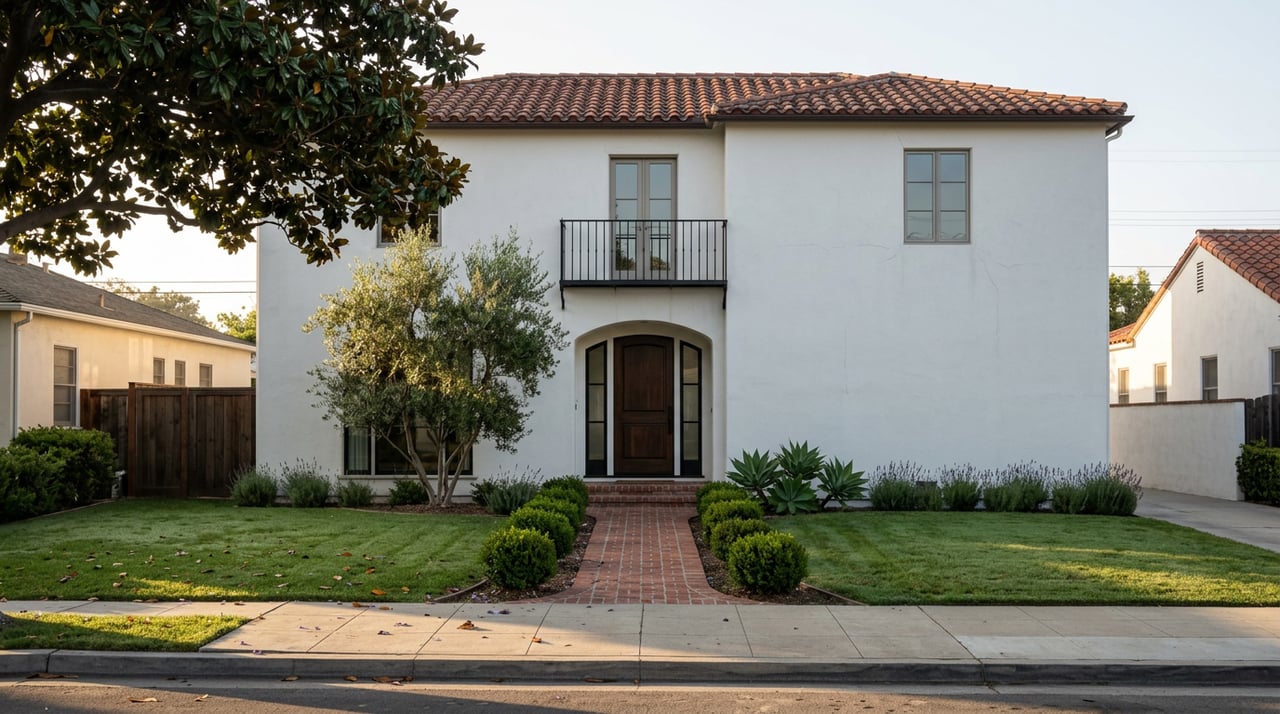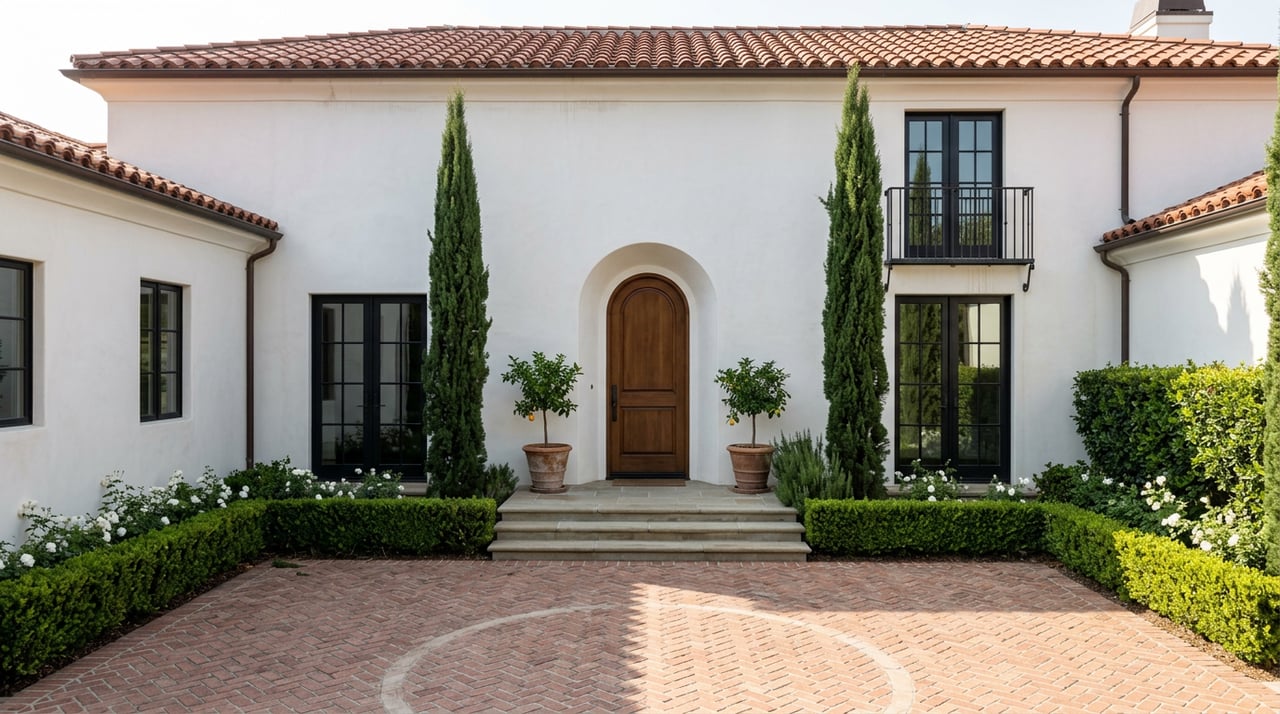
A six-unit building on North Sweetzer Avenue came on the market this year listed at a 5.39 percent going-in cap rate, with a note that the number could climb to 8.24 percent once the units turn over. That is not a typo and it is not an aggressive pro forma. It is what happens when a 1959 building sits inside West Hollywood's Rent Stabilization Ordinance, and it is the single fact that separates a real underwriting conversation about this market from a generic one.
The instinct, looking at that spread, is to treat it as upside: buy low, wait for tenants to leave, collect the higher number. That instinct is wrong in a specific, quantifiable way, and the correction matters more than any cap rate on any flyer. The advertised yield on a West Hollywood apartment building is the seller's number. The buyer's number requires subtracting a rent-control clock that runs slower than most investors assume, a seismic liability that transfers with the deed regardless of what the rent roll says, and adding back a tax exemption most buyers forget to price until it is too late to use it in their offer.
The Gap Everyone Sees, and the Clock Nobody Reads Twice
West Hollywood's Rent Stabilization Ordinance, in place since 1985, covers most multifamily buildings with a certificate of occupancy issued before July 1, 1979. For the period running September 1, 2025 through August 31, 2026, the city's Annual General Adjustment, the ceiling on how much an in-place rent can rise each year, is set at 2.25 percent. That is tighter than it sounds next door.
| City | Current annual rent cap |
|---|---|
| West Hollywood | 2.25% (through Aug 31, 2026) |
| City of Los Angeles (LARSO) | 3.0% flat |
| Santa Monica | 2.3% |
That half-point of daylight compounds. A West Hollywood landlord cannot bank an unused increase from a prior year and apply it later, and the annual bump can only be taken once every twelve months per tenant. The practical result, after a decade or more of a tenant staying in place, is a one-bedroom that might be renting at $1,100 to $1,500 a month sitting in a building where a comparable unit down the hall, on a fresh lease, runs $2,200 to $3,200. That gap is real. What is not real is the assumption that a buyer can close it on their own schedule.
The West Hollywood neighborhood trades on density and walkability that keeps market rents high, which is exactly why the spread looks so attractive on a rent roll. But the ordinance does not let a new owner accelerate the timeline. Rent moves to market only when a unit vacates, and a landlord has no lawful way to make that happen on demand.
Turnover Is a Bet, Not a Button
The second piece of friction shows up at the escrow table, not in the pro forma. West Hollywood administers Maximum Allowable Rent differently depending on when a tenancy began: pre-1996, 1996 through 1998, and 1999 or later each carry their own treatment. A building that has changed hands once or twice over sixty-plus years often arrives with MAR figures that were never reconciled across units. A buyer taking title on a fourteen-unit pre-1979 building on Crescent Heights, for instance, can inherit a rent roll where some units are registered correctly and others are not, and rebaselining those numbers requires a formal petition to the city's Rent Stabilization Division before a lawful increase can even be calculated.
Every covered unit also has to be registered annually, at $144 per unit under the city's current fee, half of which can be passed through to tenants as a $6 monthly surcharge. Miss a registration year and the consequence is not a fine you write a check for and move past. A landlord who fails to register cannot lawfully collect that year's increase, and the missed increase does not carry forward. It is gone. For a new owner, that means the first ninety days after close are not a grace period. They are the window in which a confused baseline either gets fixed or gets locked in as a permanent revenue loss.
None of this means the rent-control spread is fake value. It means the spread has a timeline attached to it that the seller's cap rate does not disclose, and that timeline is set by tenancy length and turnover, not by the buyer's business plan.
The Liability That Transfers With the Deed
The second correction has nothing to do with rent and everything to do with the building itself. West Hollywood was one of the earlier Southern California cities to adopt a mandatory seismic retrofit program, and its 2017 ordinance covers wood-frame buildings with soft, weak, or open-front ground floors, the tuck-under parking construction common to 1950s and 1960s apartment stock. City surveys identified somewhere between 700 and 800 buildings that fall under the requirement, with typical retrofit costs running $40,000 to $200,000 depending on size and condition.
A landlord can pass through only 50 percent of that cost to tenants, spread over ten years as a monthly surcharge approved through the Rent Stabilization Commission, separate from the annual rent increase. The other half comes straight out of the owner's return. And this is not a liability a buyer can wait out. West Hollywood's building division has said publicly it can flag a noncompliant property with the LA County Assessor so the obligation shows up on a title search, which means it follows the building through a sale whether or not it was disclosed in casual conversation with the seller.
This has become more than a compliance footnote this year. At an April 2026 city council meeting, council members Chelsea Byers and John Erickson pushed for tougher enforcement against owners who had not acted, while Mayor John Heilman noted that some of those owners are small landlords who may simply not understand what is required of them. The council directed staff to start calling owners directly using contact information on file with the Rent Stabilization Division, rather than relying on mailed notices alone. Federal FEMA grant support that has helped some owners offset design and construction costs is also winding down this year, which raises the cost of waiting for anyone still on the list.
Before writing an offer on a pre-1979 building, checking the city's seismic retrofit survey list is not optional due diligence. It is the difference between inheriting a known, amortizable cost and inheriting a surprise one after close.
The Line Item a West Hollywood Seller Doesn't Have to Explain
The one adjustment that runs in the buyer's favor is easy to miss because it is an absence rather than a line item. West Hollywood incorporated as its own city in 1984 and is not part of the City of Los Angeles. That matters directly at closing. Los Angeles's Measure ULA transfer tax adds a 4.0 percent surcharge on sales above $5.4 million and 5.5 percent above $10.9 million, on top of the city's existing base transfer tax. That tax has no legal force inside West Hollywood's city limits.
On a $7 million transaction, that is roughly $315,000 in surcharges a West Hollywood seller simply does not owe that a seller one block over in Los Angeles proper would. On a $12 million deal, the gap widens to around $660,000. Buyers comparing similarly priced, similarly performing buildings on either side of that boundary should be adjusting their maximum bid upward for the West Hollywood asset to account for it, not treating the two markets as interchangeable because they share a zip code or a commercial corridor. If you're weighing that comparison against other Los Angeles submarkets, it's worth reading how a similar boundary effect plays out for small multifamily buyers evaluating Silver Lake, where the calculation runs differently because Silver Lake sits inside LA's LARSO and full ULA exposure.
So What Is the Real Number
Put the three pieces together and the advertised cap rate on a West Hollywood apartment building is neither the trap some investors assume rent control makes it, nor the free upside a big legacy-to-market spread might suggest at first glance. It is a number that needs three adjustments before it means anything: a realistic timeline for how fast turnover actually closes the rent gap, given a 2.25 percent annual ceiling that cannot be banked or accelerated; a clear-eyed accounting of any transferring seismic obligation, priced at replacement cost rather than assumed away; and full credit for the ULA exemption baked into the maximum a buyer can justify paying relative to an equivalent building across the city line.
Frequently Asked Questions
Does a seismic retrofit obligation show up automatically when I run a title search? It can. West Hollywood's building division has the ability to flag a noncompliant property with the LA County Assessor, which means the obligation can surface in a title search even without a specific mention in the listing.
If I complete a mandated seismic retrofit, can I raise rents to make up the cost? Only in part, and only through the process the ordinance sets out. A landlord may pass through 50 percent of the retrofit cost to tenants over ten years as a Rent Stabilization Commission-approved surcharge, kept separate from the annual general adjustment. It does not reset the unit's Maximum Allowable Rent.
Does Measure ULA apply if I'm buying a West Hollywood property through an out-of-state LLC or a high-value trust? No. The exemption is tied to the property's location inside West Hollywood's incorporated city limits, not to the buyer's entity structure. A Los Angeles city property above the ULA thresholds owes the surcharge regardless of how the buyer is organized, and a West Hollywood property does not owe it for the same reason.
If you're underwriting a small multifamily building in West Hollywood, or trying to figure out whether a listed cap rate actually reflects what you'd be buying, Adam Dehrey can walk through the rent roll, the seismic list, and the closing math with you before you write an offer. Schedule a Private Consultation to get a property-specific read on the numbers that matter here.